What Leeds Menopause Groups Are Really Saying About CBD in 2026
Photo: H. A. Brendekilde, Public domain, via Wikimedia Commons
On a damp Tuesday in Headingley, the talk at a menopause café table turns, as it often does, to sleep. Not to a specific brand, and not to a miracle. Just the familiar loop: waking at 3am, lying there, wondering whether the oil on the bedside table is helping or whether it is simply something to do.
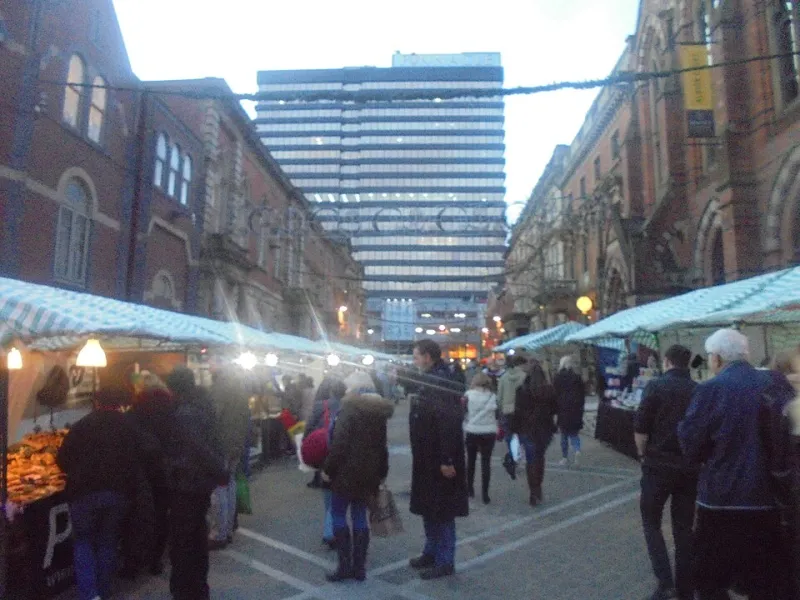
Across a handful of anonymised conversations with support-group regulars and shop staff in Headingley, Chapel Allerton and the city centre, the same themes surface: sleep, anxiety, hot flushes, joint aches and a deep suspicion of anything that sounds too good to be true. That suspicion is healthy. Leeds has a decent independent CBD scene, but a friendly counter is not a clinic.
The café table, the counter and the gap between them
One woman in her early fifties says a CBD oil helped her feel less wired at bedtime. Another says she noticed nothing at all. A third uses a balm on her knees and likes the ritual more than the result. None of these accounts proves that CBD treats menopause. They are experiences, and they matter, but they are not the same thing as evidence.
Shop counters hear a compressed version of the same conversation. The question is often some variation of: which one for menopause? Staff can explain CBD content, strength and lab reports. They cannot diagnose, prescribe or tell you to stop HRT. The best Leeds retailers know that. The worst ones promise the moon and call it wellness.
What CBD can reasonably claim — and what it cannot
CBD is not a licensed medicine for menopause. There is no robust NHS-approved guidance recommending it for hot flushes, night sweats or the hormonal shifts that come with perimenopause. The evidence base is thin and mostly not menopause-specific. Some small studies have looked at CBD and sleep or anxiety, but the results are not strong enough to justify sweeping claims.
What CBD can reasonably be is a comfort product for some people: something that may help them feel calmer as part of a wider routine. It is not a substitute for HRT, talking therapies, exercise, sleep hygiene or a proper conversation about symptoms. It is also not risk-free. CBD can interact with some medicines, including certain blood thinners, epilepsy medicines and drugs processed by the liver. If you are on HRT, blood pressure tablets or anything else regular, ask a pharmacist.
In the UK, CBD is generally sold as a food supplement rather than a medicine, and products should comply with Novel Food rules. Check the label for CBD content per dose, THC content and a batch-specific certificate of analysis. A responsible Leeds shop will have lab reports available without a theatrical sigh.
The Leeds shop-counter questions that keep coming back
How many milligrams? Full spectrum or isolate? Will it show on a drug test? Can I take it with my HRT? These are sensible questions. The honest answers are often less exciting than the marketing: start low, read the batch report, tell your clinician what else you take, and do not expect a hot flush to vanish because a bottle has a nice font.
Several women mentioned using CBD in the evening rather than during the day. One described it as a signal to slow down, not a switch that turns off symptoms. Another said she stopped after a fortnight because it made no difference and she did not want to keep spending. That is not a failure story. It is a useful reminder that trying CBD should include a plan to stop if it is not earning its place on the shelf.
A checklist for the GP or pharmacist conversation
- Write down your main symptoms and when they happen. Sleep, flushes, anxiety and joint pain are different problems, even if they arrive together.
- Take the actual bottle, or at least the label and batch number, rather than a screenshot of a website.
- Ask about interactions with HRT, anticoagulants, blood pressure medicines, epilepsy medicines and anything that affects the liver.
- Do not stop prescribed medication to try CBD. That is not a wellness experiment; it is a risk.
- Start with a low dose and keep a simple diary for a few weeks. Note sleep, symptoms and anything unusual.
- If you are pregnant, breastfeeding, awaiting surgery or have liver problems, get advice before buying.
- If a product claims to cure menopause, treat that as a reason to walk away.
A GP or pharmacist may not have a neat answer about CBD, because the evidence is not neat. But they can help you weigh interactions and avoid replacing proven treatment with hope. That conversation is worth having before you spend £40 on a bottle.
The sensible Leeds takeaway
CBD may be a useful comfort for some women navigating menopause, but it is not a hormone treatment and it is not a cure. The Leeds shops worth your time will talk about dosage, lab reports and limits. The menopause café tables worth listening to will tell you the truth: some things help a little, some help not at all, and the best decisions are made with evidence rather than adjectives.